


Machine Spotlights: Another Selection – 40 years of Engineering Excellence (Page 8)
Forty years of engineering projects across aerospace, automotive, medical, and precision engineering generates a broad and varied body of work. This selection draws on that archive to illustrate the range of problems TQC has been asked to solve — different industries, different technical constraints, different production environments — and the engineering approach applied in each case.
If any of the systems shown are relevant to a project you are currently working on, contact us to discuss your requirements in more detail.
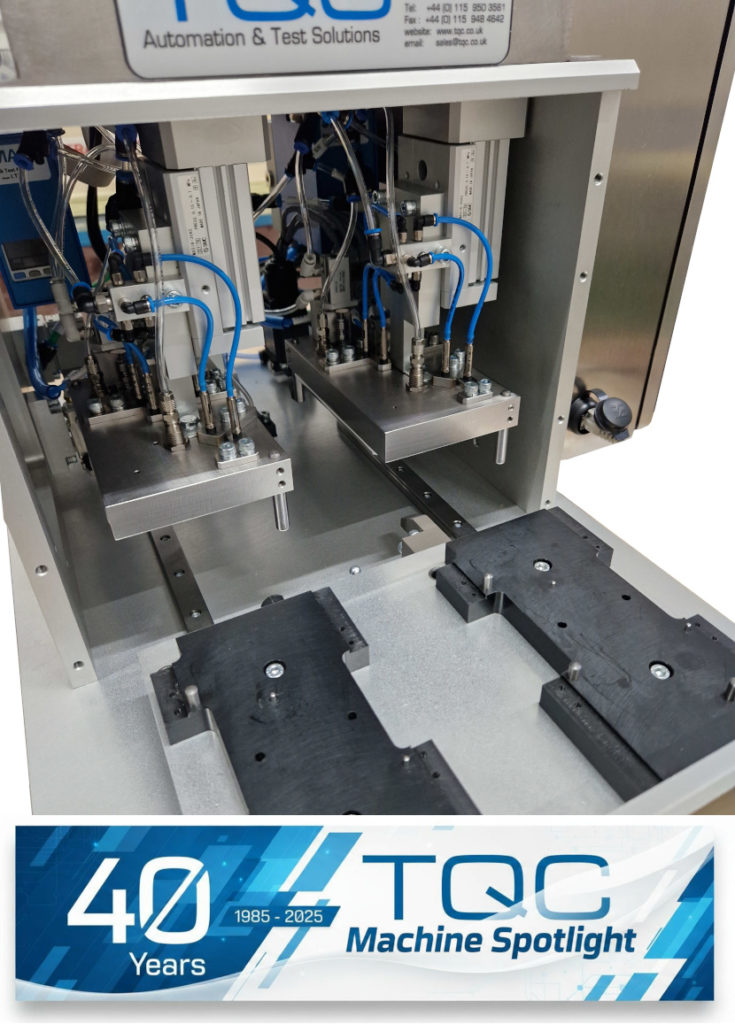
- Air decay leak testing of medical lab-on-a-chip device (supplied in 2023)
- Facility to test a complex device for leakage, testing air decay leak testing to the limit
THE PROBLEM: This blood analysis device has very small capillaries and sophisticated operation meaning zero leakage in the test circuit was critical for correct operation. This lab-on-a-chip device is single use so high volumes are needed, this means automated, traceable leak testing was a requirement for 100% of production.
WHAT TQC SUPPLIED: Standard drawer fixture based tooling combined with the Multi Application Leak Test (MALT) unit provided an easy to load/unload facility to test devices. Automatic port sealing and valve switching provided the ability to test multiple circuits using different test pressures.
WHY IT WORKED: The sensitivity of the MALT unit allows air decay to measure leakage to the necessary limits. Short test connections and the locally mounted pneumatic MALT module ensure the test volumes were minimised. Two drawers per benchtop unit allowed production volumes to be met. Multiple units supplied globally increased testing capabilities.
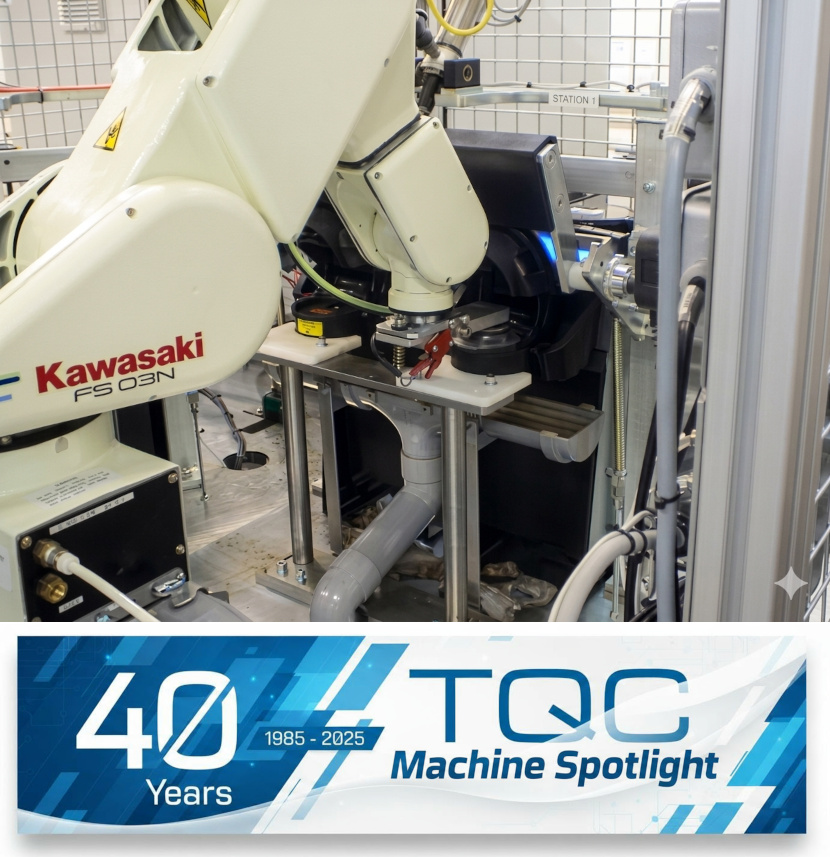
- Robot cell for cycle testing of coffee pod machines (supplied in 2007)
- Function and life cycle testing of professional coffee machines
THE PROBLEM: Coffee pod based drinks and associated machines are in common use today and to ensure reliable operation new designs of machine need life cycle testing. Testing that the pods are pieced correctly, that water is delivered at the right temperature and to the correct volume and finally that the spent pod is ejected all need to be repeatable carried out.
WHAT TQC SUPPLIED: Combining a 6-axis robot, pod bowl feeder, water handling and suitable mounting locations for test units allowed the automated life cycle testing as needed. The equipment mimicked the normal coffee making method and by interfacing with the machines under test the operational performance was checked.
WHY IT WORKED: By automatically feeding pods into the system and using a robot to load the coffee machines under test provided a fully automatic solution. Machined can be continuously cycled with new pods as required and by having multiple machines under test at the same time the robot was kept busy and throughput maximised.
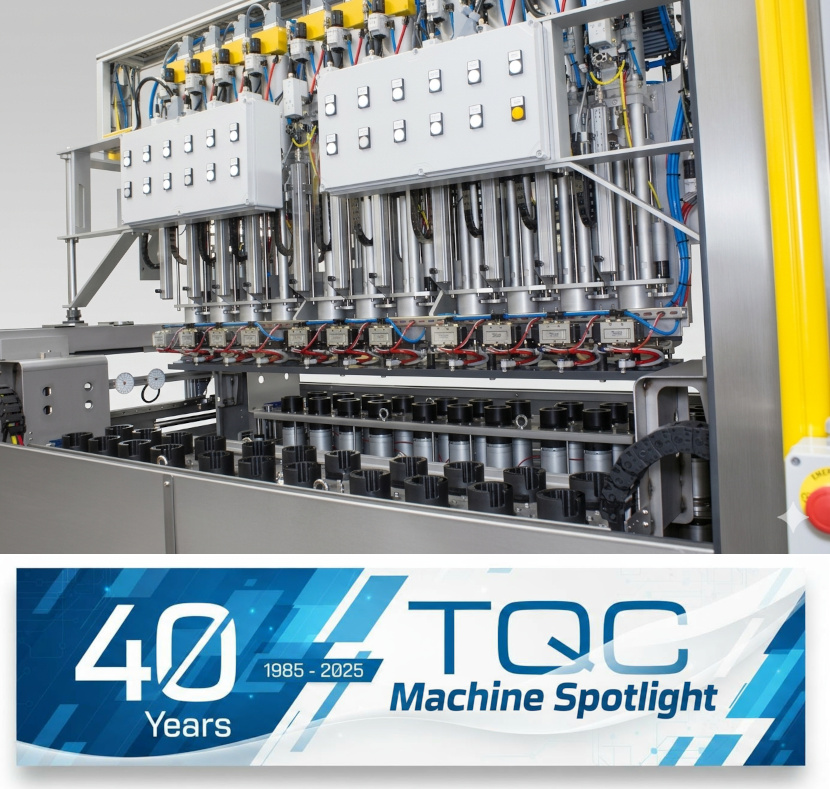
- Gas Bottle Pressure testing system (supplied in 2012)
- High volume testing of soft drink gas cannistersto ensure safe household use
THE PROBLEM: A requirement for these gas bottles / cylinders is to be pressure tested to meet DOT standards. Due to their useage as a refillable bottles, the volumes that need to be tested is high, a system capable of pressure testing 600 bottles per hour is needed.
WHAT TQC SUPPLIED: A water filled tank, multiple test stations positioned centrally and load/unload stations positioned either side provide high throughput testing. Transfer carriages move bottles down into a water tank for filling and then across and up into the testing position. Dedicated screwing heads secure pressure transducers inside the liquid filled bottles to monitor the internal pressure during the test cycle. Station mimics display test results. Bottles are moved to an empty and unload position.
WHY IT WORKED: Utilising 2 load and unload stations and a central test position allowed simultaneous testing during manual load and unload cycles. Multiple test heads each with dedicated pressure sensing ensure each gas bottle is tested correctly.
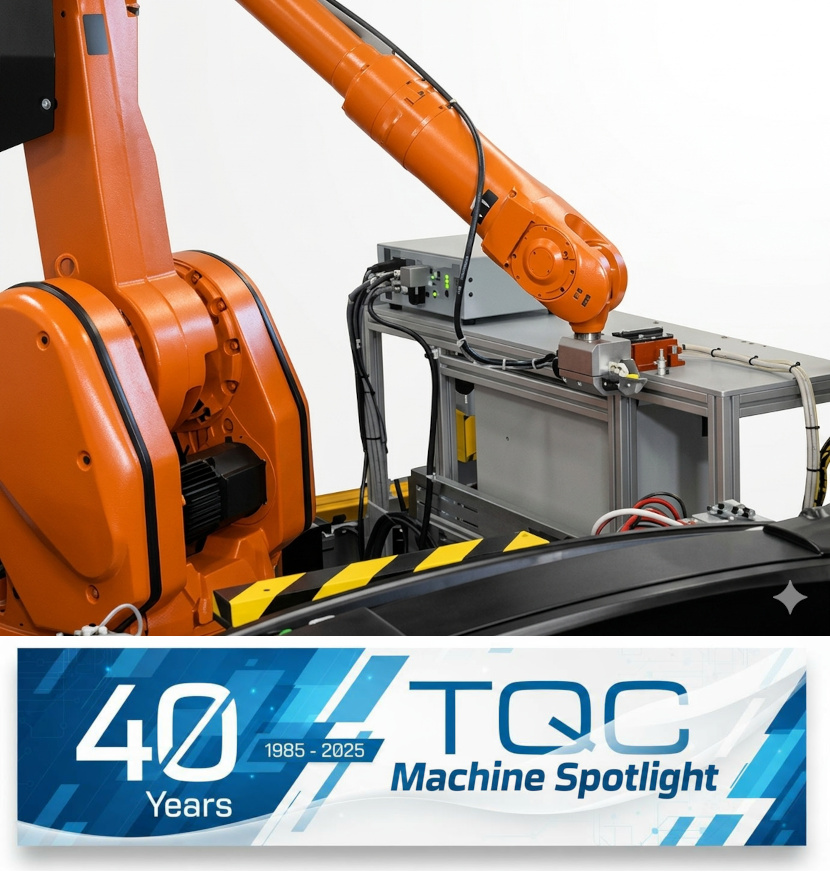
- Robotic router for production of automotive bumper variants (supplied in 1998)
- Automated solution for cutting out profiles of a plastic bumper for variant part fitting
THE PROBLEM: Automotive bumpers are very large plastic bumper requiring complex and expensive mould tooling. Bumpers are fitted with various features such as fog lights and parking sensors, dependent on the options chosen for the associated vehicle. A post moulding process is needed to use a single moulding to meet these variant requirements.
WHAT TQC SUPPLIED: Integration of a 6-axis robot with end of arm router with a bespoke location fixture that secures the moulding during the cutting process provides a solution for cutting shapes out of plastic mouldings. Static elimination equipment is integrated to ensure debris doesn’t stick the the bumper during the routing operation.
WHY IT WORKED: Using a 6-axis robot with router provided a flexible solution for cutting out profiles in plastic bumpers. A bespoke location fixture secures the moulding in a known position to ensure correct processing.
See Page 1, Page 2, Page 3, Page 4, Page 5, Page 6, Page 7……More machine spotlights coming soon