


Selected Machine Spotlights – 40 years of TQC (Page 9)
Every project on these pages started with a problem someone couldn’t solve with off-the-shelf equipment. What follows is a selection from TQC‘s project archive — different industries, different constraints, different requirements — and the engineering work that produced a solution in each case.
If you have a requirement along these lines, contact the TQC team — no obligation, just engineering.
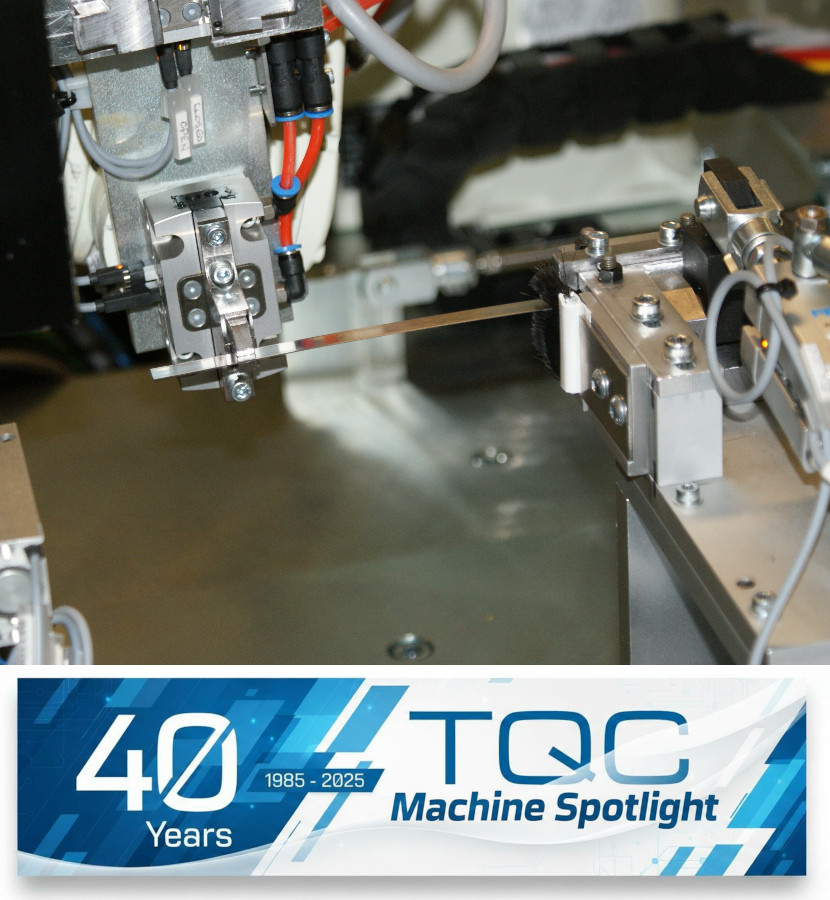
- Fully automatic welded ring laser welding robot cell (supplied in 2012)
- Facility to produce various sizes of joined and formed metal rings for sealing application
THE PROBLEM:
Production of special metal sealing rings is labour intensive and has manufacturing challenges. The variety of strip widths, material thicknesses and ring diameters does not support producing parts for stock. Quality assurance is critical for these sealing components.
WHAT TQC SUPPLIED:
A robot cell with multiple stations allowed fully automated production of welded rings. Integration of a laser welding facility with other bespoke stations for part processing and checking ensured metal strip was formed into tight tolerance parts.
WHY IT WORKED:
Automated strip feeding and length monitoring ensured the correct ring circumference was presented. Robot programming allowed the forming (looping) of various ring sizes possible. Laser welding accurately joined the ends without filler material. Post welding operations were used to create the correct part geometry and finish. Machine output is stacks of finished, quality ensured parts.
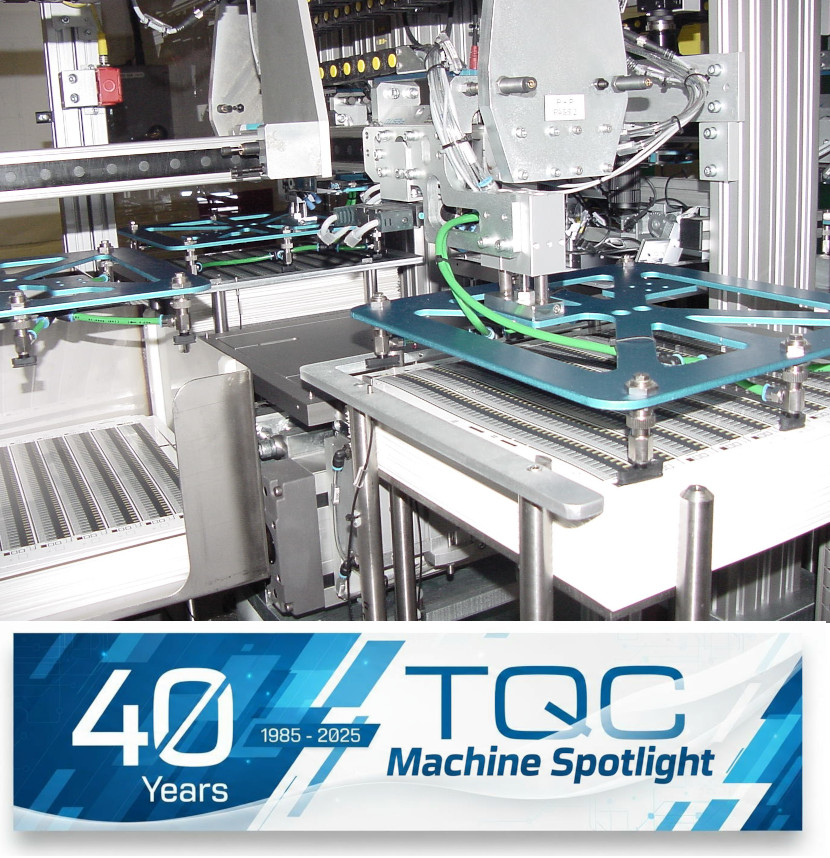
- High speed inspection of diagnostic cards for medical use (supplied in 2008)
- Automatic destacking, inspecting and restacking sheets at high speed
THE PROBLEM:
Consumable medical diagnostics strips are a high production volume product as they are single use. Strips are produced in cards that require inspection prior to cutting to ensure they have been printed correctly. The multiple layers that are printed need to align and to be registered correctly.
WHAT TQC SUPPLIED:
To meet production volumes two identical system were supplied, each unit inspecting a single card, with up to 50 strips on, at a rate of just over 3 seconds. Compliant pick and place units pick cards from infeed stacks and place the card on a high speed carriage. This carriage indexes the card underneath a vision inspection solution prior to the card been picked and placed at the outfeed.
WHY IT WORKED:
By combining high speed vision inspection with servo driven transfer devices allowed checking of multi layered, printed cards. It is critical that these medical diagnostic strip work correctly and this automatic solution provides assures that only good cards are transferred for cutting and packing.
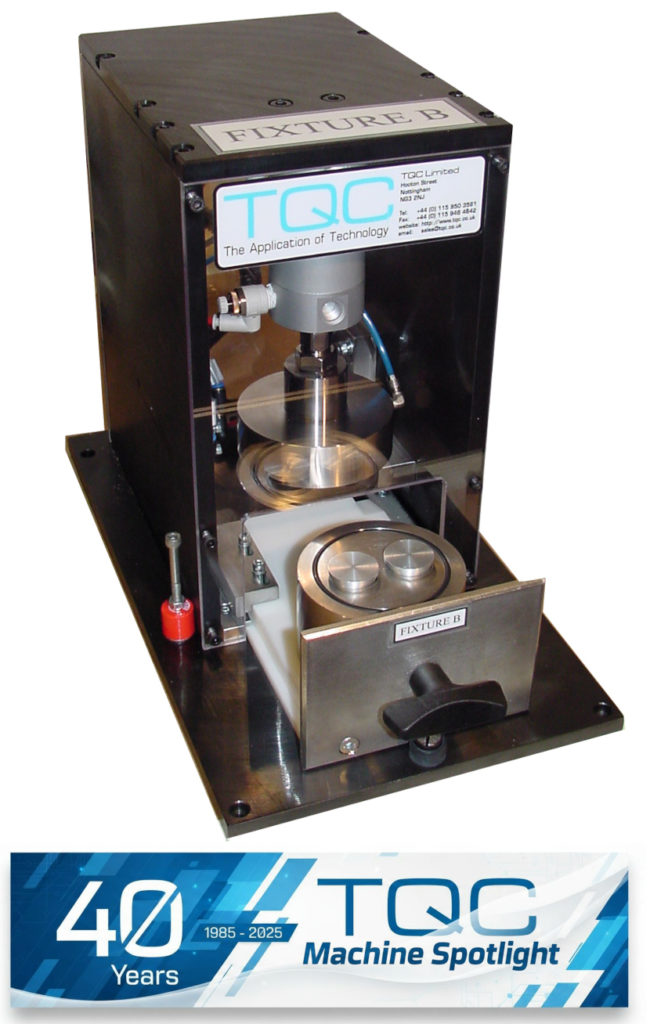
- Leak Testing of Sealed Cartridges – Twin Fixtures, Single Instrument (supplied in 2004)
- Standard series 20 leak testing solution with manual load/unload and automatic test
THE PROBLEM:
Leak testing is needed on these sealed cartridges to ensure no ingress of moisture occurs. These part are used in critical applications so quality assurance is very important.
WHAT TQC SUPPLIED:
Two test fixtures and a single leak test instrument allows ‘pendulum’ testing of parts. Parts are unloaded and loaded into one fixture while the other fixture is carrying out the leak test on another set of parts. To increase capacity, 2 parts are tested in each fixture at the same time. The leak test was configured for a sealed part and used a vacuum dosing technique.
WHY IT WORKED:
Incorporating proven air decay leak testing with correctly designed and manufacture tooling ensured tested parts would not have water ingress in normal operating conditions. Production volumes was met by simultaneously testing parts in one fixture while loading and unloading parts in the second fixture.
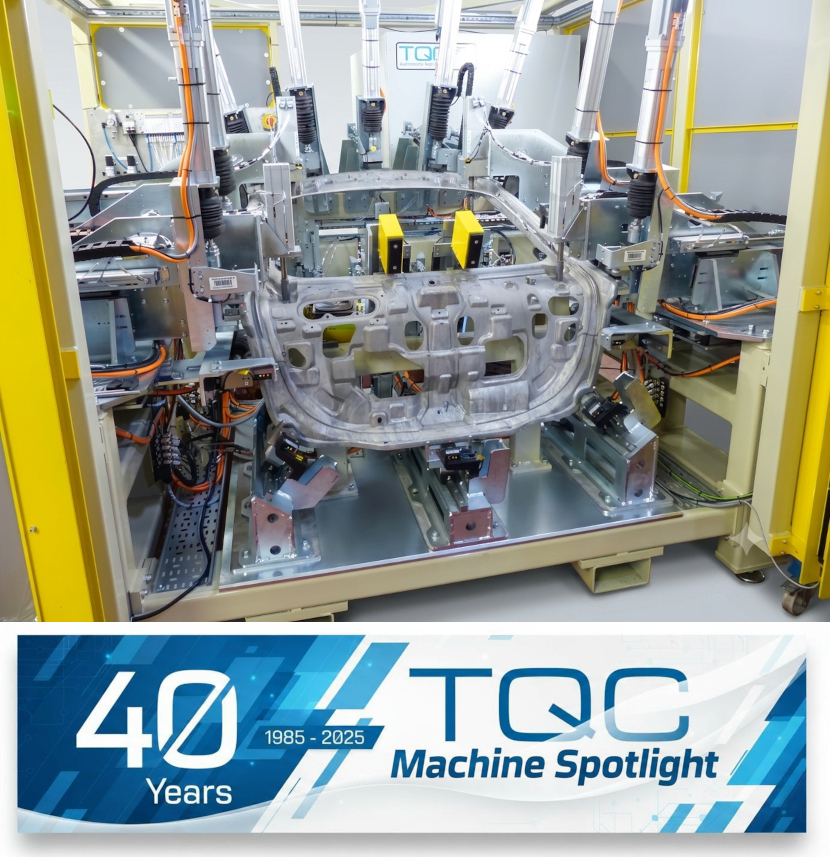
- Measurement and Truing Equipment for large magnesium castings (supplied in 2016)
- Solution to correct tailgate castings so they are within tolerance for good vehicle fitment.
THE PROBLEM:
To reduce weight in vehicle tailgates magnesium casting can be used. The issues with castings of this size and design is that twist and distortion occurs, this needs to be correctly to meet tolerances. By measuring and truing the casting the required geometry can be met, the exact operation is different for all castings so needs an intelligent solution.
WHAT TQC SUPPLIED:
Equipment to the same concept, but with dedicated tooling was supplied for 2 designs of tailgate. The systems use sensors and servo actuators positioned a various points around the casting to provide the measurement and truing functionality. Up to 16 points needed to be used to transform the out of specification castings into something the end user would accept.
WHY IT WORKED:
By integrating complex servo controlled actuators and measurement sensors at defined points, along with bepoke location tooling, allows the manipulation of the magnesium casting. Intelligent control moitors numerous points of the casting and then decides on which actuators need to operate and to what degree. Multiple passes over the part produces a part to tolerance.
See Page 1, Page 2, Page 3, Page 4, Page 5, Page 6, Page 7, Page 8……More machine spotlights coming soon