

Electric Vehicle Leak Testing
Clients: Leading Global Automotive Manufacturers
Applications: Battery Trays, Electrified Drivetrains, Cooling Systems, Cast Housings
Vehicle Types: Battery Electric (BEV), Plug-in Hybrid (PHEV), Mild Hybrid (MHEV)
Test Methods: Air Decay Pressure Testing, Helium Leak Detection, Flow Testing
Integration: Robotic Handling, Automatic Assembly, Laser Marking, Geometry Verification
Experience: 30+ Years Automotive Leak Testing Expertise
Electric Vehicle Leak Testing Expertise
TQC has supplied leak testing solutions for electric and electrified vehicle components since mainstream EV production commenced. Our systems address the unique challenges of battery electric vehicles (BEV), plug-in hybrids (PHEV), and mild hybrids (MHEV), drawing on four decades of automotive leak testing experience.
Electric vehicle leak testing prevents:
- Battery coolant leaks (thermal runaway risk from overheating)
- Transmission fluid loss (drivetrain lubrication failures)
- Water ingress into battery compartments (short circuits, corrosion)
- Coolant mixing with electrical components (system failures)
- Cross-contamination between hydraulic and cooling circuits
Electric Vehicle Leak Testing – Components Tested
TQC has provided leak testing solutions for critical EV components:
Battery Systems: Battery trays (structural housings), battery compartment cooling fins, thermal management systems, coolant distribution manifolds
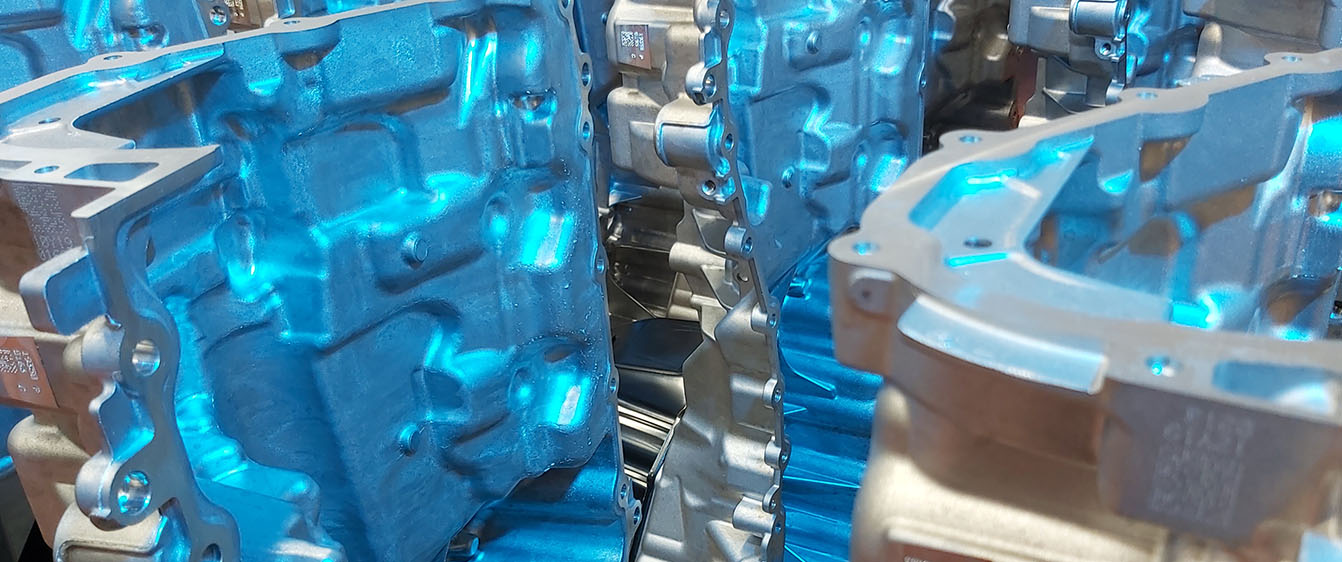
Electrified Drivetrains: Clutch housings (PHEV/MHEV), transmission cases (integrated motor/gearbox), differential housings, inverter cooling jackets
Thermal Management: Cooling plates, heat exchangers, radiator assemblies, chiller units, battery cooling loops
Cast Aluminium Components: Die cast housings with complex internal water/oil galleries, machined transmission cases, motor housings requiring multi-zone testing
Battery Tray Leak Testing
Application: Pressed steel structural trays housing lithium-ion battery packs.

System Configuration: Fully automated palletised conveyor presenting trays to leak test station. Pneumatic sealing onto tray flange. Low-pressure air decay testing (typical 0.1-0.5 bar) monitoring pressure fall over test period. Automatic pass/fail segregation.
Why Critical: Battery trays form sealed compartment protecting cells from water ingress. Leaks allow moisture penetration causing:
- Cell corrosion (capacity degradation)
- Short circuits (thermal runaway risk)
- Structural weakness (crash safety compromise)
System Features: Palletised conveyor, flange sealing, low-pressure testing (prevents tray deformation), MALT controller, automatic unload.
View Full Case Study: Battery Tray Leak Test Machine
Electrified Drivetrain Testing
Application: Aluminium die cast clutch housings, transmission cases, integrated motor/gearbox assemblies for PHEV and MHEV vehicles.


Complexity: Electrified drivetrains combine mechanical and electrical systems requiring isolated testing of multiple cavities:
- Oil galleries (lubrication circuits)
- Water jackets (motor/inverter cooling)
- Hydraulic passages (clutch actuation)
- Sealed compartments (electrical components)
Multi-Zone Sealing: TQC integrates 50+ individual seal units in single fixture enabling simultaneous or sequential testing of all cavities. Custom sealing designs isolate water, oil, and hydraulic circuits preventing cross-contamination.
Integrated Operations:
Plug Assembly: Automatic feeding and insertion of sealing plugs into casting features. Over-check leak testing verifies plug sealing integrity post-installation.
Pass Through Characteristics (PTC) Verification: Automated dimensional checking ensuring castings meet assembly tolerances. Verifies parts will mate correctly during final vehicle assembly at engine plant.
Laser Marking: 2D Datamatrix barcode application for traceability. Automatic readability verification ensures codes scannable throughout production.
Robotic Material Handling: 6-axis robots with complex double-headed grippers transfer castings between leak test, assembly, checking, and marking stations. Handles increasing electrified drivetrain volumes without operator bottlenecks.
Battery Cooling Fin Testing
Application: Aluminium cooling fins for battery thermal management systems.
Multi-Station Suite: Parallel processing of multiple parts meeting high production volumes. Adjustable fixtures accommodate cooling fin variants without tooling changes.

System 1 – Leak Testing: MALT air decay testing with automatic sealing connectors. Fixed connector at one end, sliding connector at opposite end accommodating length variants. Tests coolant flow passages preventing blockages and leaks.
System 2 – Flow and Inspection: Flow testing verifying coolant passage open (no manufacturing debris/blockages). Flatness checking ensuring proper gasket sealing when assembled. Laser marking for traceability.
Why Critical: Battery cooling fins dissipate heat from lithium-ion cells. Leaks or blockages cause:
- Uneven cooling (cell temperature variation)
- Hotspot formation (accelerated degradation)
- Thermal runaway risk (overheating cells)
- Reduced battery lifespan and performance
Electric Vehicle Leak Testing – Test Methods for EV Components
Air Decay (Low Pressure): Standard method for battery trays and structural components. Test pressures 0.1-1 bar prevent thin-wall deformation. Detects leaks >10⁻³ mbar·l/s. Cost-effective for production volumes.
Air Decay (Multi-Zone): Electrified drivetrain housings require isolated testing of water, oil, and hydraulic circuits. 50+ seal points enable comprehensive cavity verification. Sequential or simultaneous testing depending on cross-contamination risk.
Helium Leak Testing: Critical sealed components (motor housings, inverter cooling jackets) require high sensitivity. Helium mass spectrometry detects leaks 10⁻⁶ to 10⁻⁹ mbar·l/s. Prevents moisture ingress into electrical assemblies.
Flow Testing: Cooling circuits verified for adequate flow rate. Detects blockages from casting sand, machining swarf, or assembly debris. Ensures thermal management system performance.
Integrated Automation
EV component testing often requires multiple operations beyond leak detection:
Robotic Material Handling: 6-axis robots with custom grippers transfer parts between stations. Double-headed grippers handle two castings simultaneously doubling throughput. Collaborative robots enable flexible cell layouts.
Automatic Plug Assembly: Vibratory bowl feeders orient sealing plugs. Pick-and-place or press-fit systems install plugs into casting ports. Leak testing verifies plug sealing post-installation.
Dimensional Verification: Vision systems or contact probes verify pass-through characteristics (mounting holes, mating surfaces, bolt patterns). Ensures parts assemble correctly at vehicle plant.
Laser Marking: Fiber lasers apply 2D Datamatrix codes for traceability. Vision inspection verifies code readability. Codes link casting to leak test data, machining parameters, and material batch.
Data Integration: Leak test results, dimensional data, and traceability codes log to manufacturing execution systems (MES). Enables batch tracking and warranty root cause analysis.
Variant Management
Electric vehicles evolve rapidly with multiple platform variants. TQC designs systems accommodating variant flexibility:
Adjustable Fixtures: Sliding sealing connectors adjust for length variations. Interchangeable seal plates accommodate different port configurations. Recipe-driven test parameters (pressure, time, thresholds) switch automatically.
Multi-Part Capability: Same fixture tests PHEV and MHEV drivetrain variants. Software selects active test zones based on part identification (barcode scan or operator selection).
Scalability: Modular station design enables capacity expansion. Additional leak test stations, robotic cells, or marking modules integrate without line redesign.
Related Capabilities
TQC‘s electric vehicle leak testing expertise includes:
- Battery tray pressure testing
- Multi-zone drivetrain testing (50+ seal points)
- Cooling system leak and flow verification
- MALT controller integration
- Helium leak detection for critical components
- Robotic material handling (6-axis, dual grippers)
- Automatic plug assembly and verification
- Dimensional checking (PTC verification)
- Laser marking and code readability
- Data logging and MES integration
- Adjustable fixtures for variant management
If you have an electric vehicle component leak testing or related application that could benefit from TQC’s expertise, please contact us by email or phone via the contact details