


Final Machine Spotlights – 40 years of TQC (Page 10)
To close the series, a final selection from TQC’s project archive. The industries vary, the applications differ, but the starting point has been consistent across all forty years: a customer with a requirement that standard equipment couldn’t meet, and an engineering team tasked with solving it.
If you have a requirement along these lines, contact the TQC team — no obligation, just engineering.
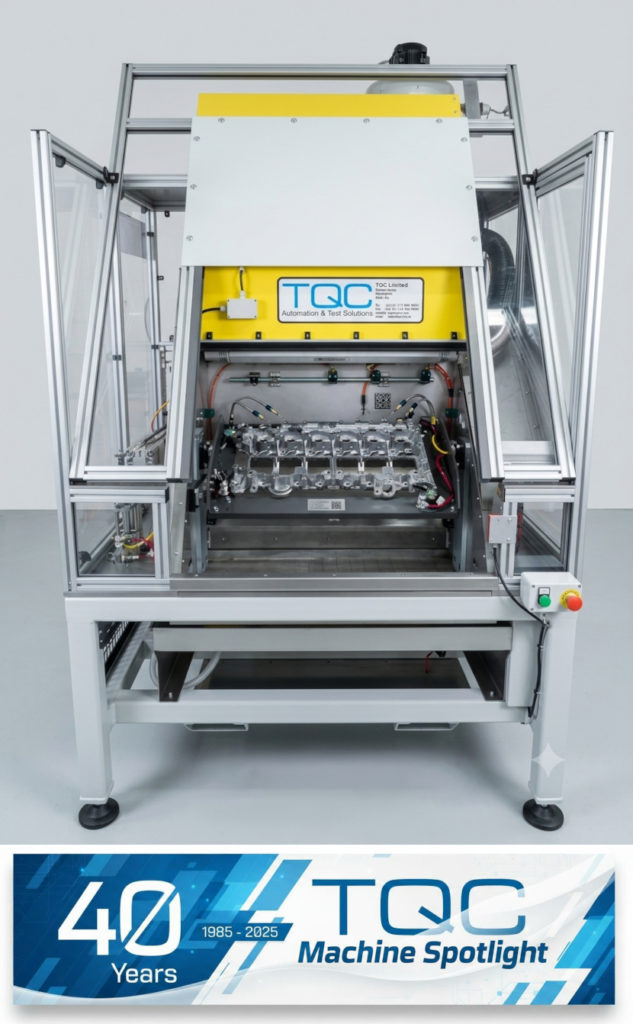
- Coolant and Swarf Cleaning Solution for Machined Automotive Parts (supplied in 2020)
- Robot loaded system that manipulates parts and ‘blows off’ unwanted post machining debris
THE PROBLEM:
Following the casting and machining process, and prior any assembly operations, parts needs to be cleaned. Coolant puddles in areas of the parts and large amounts of swarf is produced when machining the casting. An in line solution is needed to be located into an existing production line.
WHAT TQC SUPPLIED:
A robot ready machine that incorporates actuated twin parallel air knife units that travel the whole width of the part from above, and from top to bottom and back again, in-between fixture rotations. Multiple directional air nozzles have also been installed to allow for individual hole ‘blowing’ This programmable solution is optimised for fluid and swarf removal from specific holes, especially complex cross hole drilling arrangements.
WHY IT WORKED:
By integrating this machine into an existing production line it allow cleaned parts to be assembled and tested successfully. Excessive coolant and swarf can cause major issues when trying to assemble parts and can mask any leakages. This machine was designed for both robot loading and manual loading as needed.
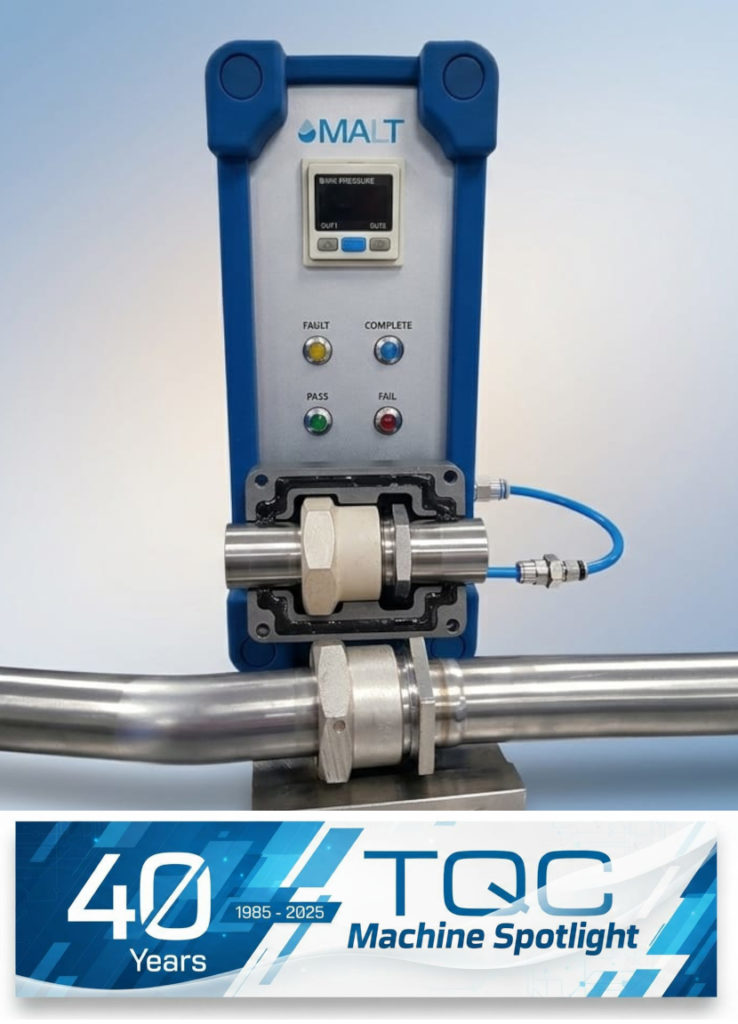
- Fully portable leak test system for pipework (supplied in 2019)
- Solution for verifying pipe joints in remote locations
THE PROBLEM:
A leading global jet engine manufacturer needed to carry out leak testing of pipework runs in the field. No electrical or pneumatic services are available so the solution needed to be self contained and allow both over pressure and vacuum testing.
WHAT TQC SUPPLIED:
The system supplied includes a TQC MALT unit, a lithium battery, manual hand pump, tablet PC and a set of bespoke tooling for use on the pipe joints. Using 2-part tooling, a test volume is created around the joint, a pressure change is created in the test volume using the hand pump and any change in this is monitored by the MALT. A tripod for mounting the MALT in the field and a protective travel case was included in the supply..
WHY IT WORKED:
Using the MALT unit with a battery and hand pump allows remote use of this leak test solution. Pipework leaks are generally from any joints present so by testing these ensures a leak tight system. Bespoke tooling for multiple pipe joints diameters and styles, each with a quick connection, means fully remote testing can be achieved
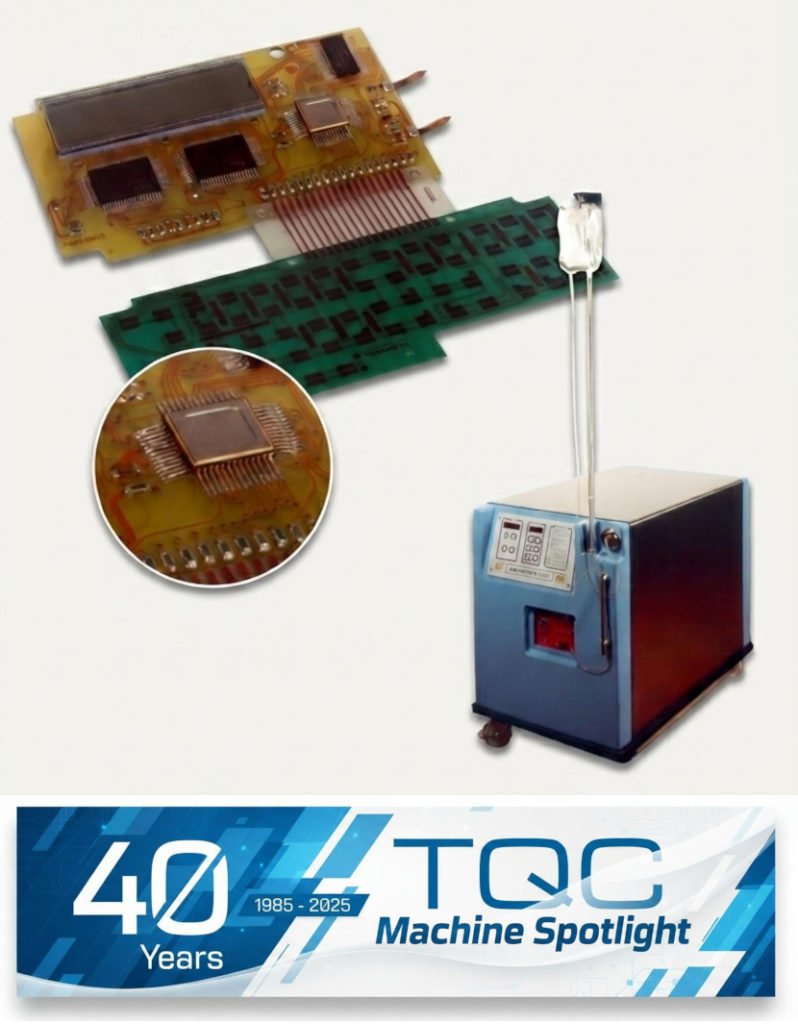
In the 1980s, TQC was designing PCBs, writing bespoke software, and working with microprocessors at a time when that was genuinely cutting-edge. The projects were varied:
Urology water purification system — a single integrated unit that took mains tap water through heating, cooling, and reverse osmosis to produce sterile fluid for use during hospital operations.
Portable digital diet calculator — a handheld device with a custom PCB, bespoke software, dedicated keyboard, LCD display, and battery power. A food database was programmed in so users could look up calorie values on the go. Entirely commonplace now; genuinely novel in 1985.
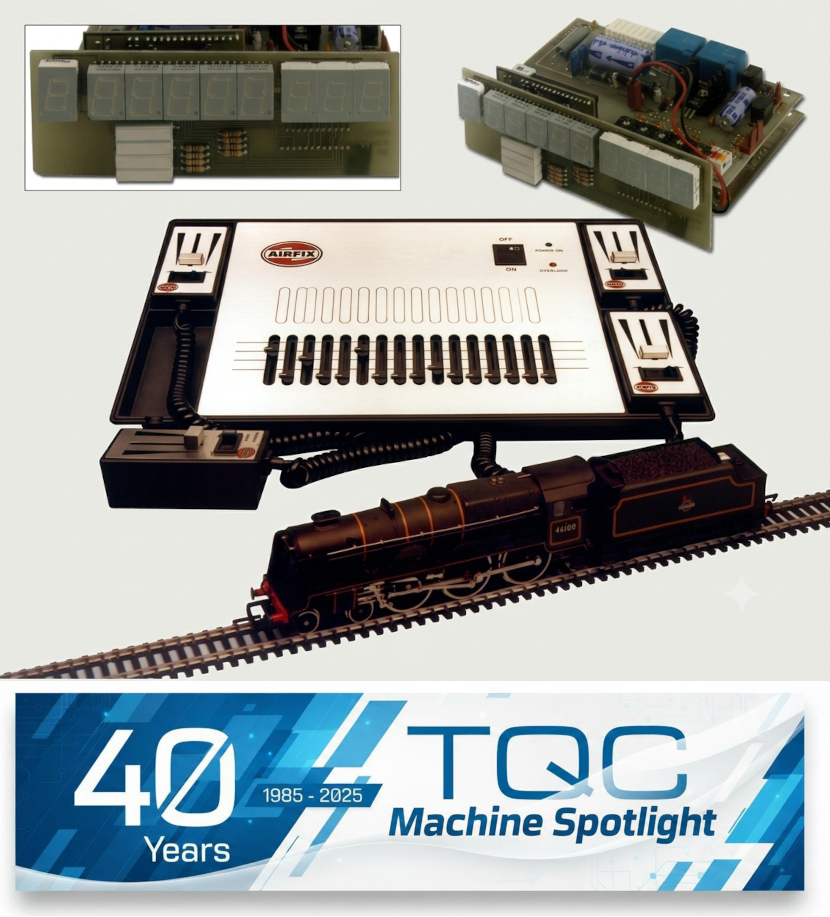
1985 — Multi-channel train controller for Airfix
TQC designed and built a new controller allowing independent operation of multiple train lines simultaneously. Each train carried a small on-board module communicating via radio frequency — TQC handled the PCB design, microprocessor, and software, then liaised with a third-party manufacturer for volume production. Consumer electronics, bespoke engineering, RF communication — not a typical day at the drawing board.
1988 — London taxi meter prototype
TQC was commissioned to design and build a prototype taxi meter intended to help regulate and standardise fares across London’s black cab fleet. A compact, precise, and regulation-critical piece of kit.
That’s 40 projects across 40 years. The industries have been varied — consumer, transport, medical, aerospace, automotive — but the process has always been the same: understand the problem, engineer the solution.
See Page 1, Page 2, Page 3, Page 4, Page 5, Page 6, Page 7, Page 8, Page 9