

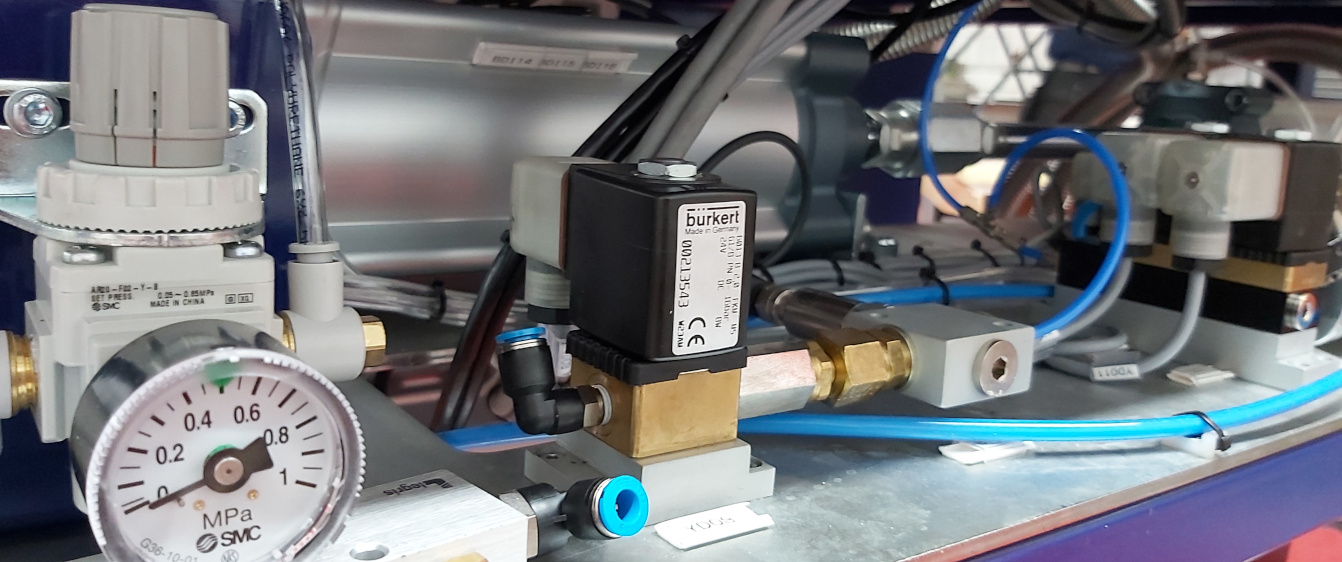
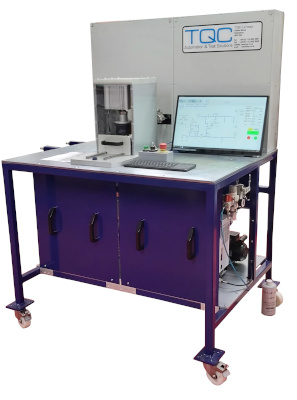
Helium Leak Test Drawer Fixture
Machine supplied: Helium leak test fixture
Client: Leading Plastic Moulding Company
Part: Automotive Electrical connector
Cycle Time: 60 seconds per part
Test Method: Helium Mass Spectrometry with Gas Recovery
Sensitivity: 1×10⁻⁴ mbar·l/s at 10 bar differential pressure
The Challenge
A leading plastic moulding company needed production leak testing for automotive electrical connectors at a specified sensitivity of 1×10⁻⁴ mbar·l/s. The test requirements included:
- Helium mass spectrometry for sensitive leak detection
- 60-second cycle time for production throughput
- Testing at 10 bar differential pressure
- Helium gas recovery to minimize operating costs
- Manual load/unload suitable for production environment
- Drawer-style fixture for operator safety during vacuum testing
Automotive electrical connectors must be hermetically sealed to prevent moisture ingress that could cause corrosion and electrical failure. The specified leak rate of 1×10⁻⁴ mbar·l/s requires helium mass spectrometry – air decay methods cannot achieve this sensitivity.
The Solution
TQC designed a Series 20 drawer fixture system with integrated helium mass spectrometry and gas recovery. The drawer mechanism provides safe manual loading outside the test chamber while automated closure and sealing enable high-vacuum helium testing. The gas recovery system monitors helium concentration and reuses test gas when above 90% purity, achieving over 50 test cycles per gas charge and dramatically reducing helium consumption costs.
Technical Overview – Helium Leak Test Fixture
Series 20 Drawer Fixture Architecture
The fixture is based on TQC‘s Series 20 drawer platform, adapted for helium mass spectrometry:
Benchtop Configuration: The fixture mounts on a workbench with the drawer extending toward the operator. This provides ergonomic access for loading and unloading while keeping the vacuum chamber and helium system at a convenient working height.
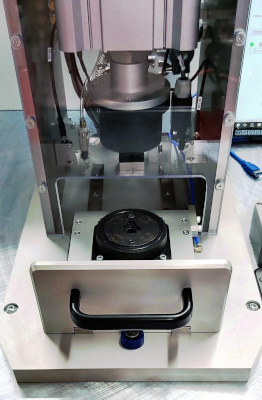
Drawer Mechanism: A sliding drawer carries the bottom tooling nest. The operator loads the connector into the nest with the drawer in the extended (load) position. Pushing the drawer forward moves the part into the test chamber behind a Perspex guard.
Automatic Drawer Lock: When a part fails the leak test, the drawer automatically locks in the closed position. This prevents the operator from opening the chamber and exposing themselves to helium gas or vacuum. The operator must acknowledge the failure before the drawer can be reopened.
Two-Position Operation:
- Load/Unload Position: Drawer extended, operator access to tooling nest
- Test Position: Drawer closed, part sealed in chamber for vacuum/helium testing
Custom Tooling for Connector Geometry
The tooling seals the connector for helium testing:
Bottom Tooling: The nest in the drawer locates the connector and provides support during vacuum and pressurization. Passages in the bottom tooling connect the connector interior to the helium supply and mass spectrometer.
Top Sealing Tooling: Mounted on compact pneumatic cylinders behind the Perspex guard, the top tooling lowers onto the connector when the drawer closes. Seals create a leak-tight connection between the tooling and connector ports.
Dual-Sided Testing: The tooling allows pressurization of the connector interior with helium while the test chamber is evacuated. Any helium escaping through connector leaks is detected by the mass spectrometer monitoring the chamber vacuum.
Helium Mass Spectrometry System
The system uses high-vacuum helium testing for maximum sensitivity:
Test Pressure: The connector interior is pressurized to 10 bar with helium tracer gas. This differential pressure (10 bar inside, high vacuum outside) drives helium through any leak paths.
Mass Spectrometer: A mass spectrometer continuously monitors the evacuated test chamber for helium molecules. The instrument separates helium from other gases and quantifies the helium concentration, providing direct measurement of leak rate.
Leak Rate Specification: 1×10⁻⁴ mbar·l/s detection limit. This sensitivity is approximately 100× better than typical air decay methods and is necessary for hermetically sealed automotive connectors.
Vacuum Level: The test chamber is evacuated to high vacuum (typically <10⁻⁴ mbar) before helium fill. This low background pressure maximizes mass spectrometer sensitivity.
60-Second Cycle Time: The system completes vacuum pump down, helium fill, test, and vent within 60 seconds, meeting production throughput requirements.
Helium Gas Recovery and Reuse
A key feature is the integrated helium recovery system that minimizes gas consumption:
Gas Concentration Monitoring: The system continuously monitors helium purity in the recovered gas. After each test, the helium concentration is measured.
Reuse Threshold: If helium concentration is above 90%, the gas is recovered and reused for the next test. This dramatically extends the usable life of each helium charge.
Automatic Dumping: When concentration falls below 90% (due to dilution with air over multiple test cycles), the system automatically vents the contaminated gas and introduces fresh helium from the supply cylinder.
50+ Cycles per Charge: The recovery system typically achieves more than 50 test cycles before requiring fresh helium. This reduces helium consumption by 98% compared to systems without recovery.
Cost Savings: Helium is expensive and supply can be constrained. The recovery system reduces operating costs significantly, making helium testing economically viable for production environments.
Helium Leak Test Fixture Test Sequence
1. Connector Loading: Operator places connector in bottom tooling nest with drawer in extended position.
2. Drawer Closure: Operator pushes drawer forward to test position. Drawer engages mechanical stops and triggers automatic test sequence.
3. Top Tooling Engagement: Pneumatic cylinders lower top sealing tooling onto connector, creating sealed connections.
4. Chamber Evacuation: Vacuum pump evacuates test chamber to high vacuum (<10⁻⁴ mbar). This removes air and provides low background pressure for sensitive helium detection.
5. Helium Pressurization: Connector interior is filled with helium to 10 bar test pressure through tooling passages.
6. Test Phase: Mass spectrometer monitors chamber vacuum for helium escaping through connector leaks. Helium concentration is measured and leak rate calculated.
7. Pass/Fail Determination: Measured leak rate is compared to 1×10⁻⁴ mbar·l/s specification. Pass/fail result is displayed on PC monitor.
8. Gas Recovery Decision: If helium concentration is >90%, gas is recovered to storage tank. If <90%, gas is vented and fresh helium used for next cycle.
9. Venting: Chamber is vented to atmospheric pressure.
10. Drawer Unlock (Pass) or Lock (Fail):
- Pass: Drawer unlocks automatically, operator pulls drawer to load position and removes tested connector
- Fail: Drawer remains locked, operator must acknowledge failure on PC before drawer unlocks
11. Ready for Next Part: System ready for next connector loading.
PC-Based Control System for Helium Leak Test Fixture
Control Functions:
- Test sequence automation (vacuum, fill, test, vent, recovery)
- Mass spectrometer data acquisition and leak rate calculation
- Helium concentration monitoring and recovery decision
- Drawer lock/unlock control based on test result
- Test parameter storage for different connector variants
- Production data logging and result archiving
Operator Interface:
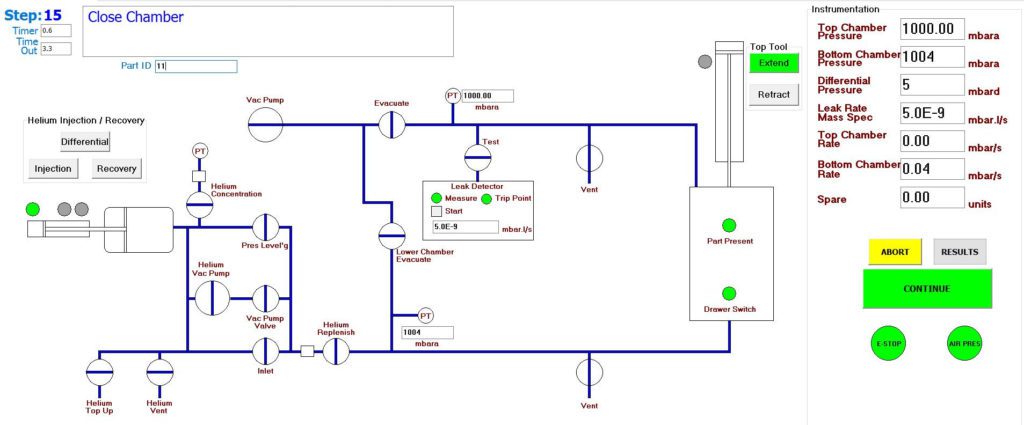
- Touchscreen monitor with circuit mimic display showing system status in real time
- Visual indication of vacuum level, helium pressure, and leak rate
- Pass/fail indication with alarm
- Helium gas status (concentration, cycles remaining, supply pressure)
- Fault diagnostics and troubleshooting guidance
System Specifications – Helium Leak Test Fixture
- Fixture Type: Series 20 drawer style with manual load/unload
- Test Method: Helium mass spectrometry (high vacuum)
- Leak Rate Sensitivity: 1×10⁻⁴ mbar·l/s
- Test Pressure: 10 bar differential (connector interior pressurized)
- Cycle Time: 60 seconds per part
- Vacuum Level: <10⁻⁴ mbar (chamber)
- Tracer Gas: Helium (high purity)
- Gas Recovery: Integrated with concentration monitoring
- Reuse Threshold: 90% helium purity
- Cycles per Gas Charge: >50 (with recovery)
- Drawer Positions: Load/unload (extended) and test (closed)
- Safety Feature: Automatic drawer lock on failed parts
- Tooling: Custom bottom nest and top sealing for connector geometry
- Control: PC-based with touchscreen circuit mimic display
- Application: Automotive electrical connectors
Key Features of Helium Leak Test Fixture
Helium Mass Spectrometry: Achieves 1×10⁻⁴ mbar·l/s sensitivity, approximately 100× more sensitive than air decay methods.
Gas Recovery System: Reuses helium for over 50 cycles, reducing consumption by 98% and dramatically lowering operating costs.
Concentration Monitoring: Automatic measurement of helium purity with intelligent reuse/dump decision.
Drawer Safety: Manual loading outside chamber with automatic closure for safe vacuum/helium testing. Failed parts locked in drawer until acknowledged.
60-Second Cycle: High-vacuum helium testing completed in production-compatible cycle time.
Series 20 Platform: Proven drawer fixture design adapted with helium-specific tooling and gas handling.
Custom Connector Tooling: Precision sealing for automotive electrical connector geometry.
PC Control with Circuit Mimic: Real-time system status display for operator awareness and troubleshooting.
Operator Display outlining the Test Circuit
Results
The Series 20 helium leak test drawer fixture provides production leak testing of automotive electrical connectors at the required sensitivity of 1×10⁻⁴ mbar·l/s within a 60-second cycle time. Helium mass spectrometry achieves the sensitivity necessary to ensure hermetic sealing that prevents moisture ingress and connector failure.
The integrated gas recovery system reduces helium consumption by over 98%, achieving more than 50 test cycles per gas charge. This makes helium testing economically viable for production environments where air decay methods cannot provide sufficient sensitivity.
The drawer fixture design provides safe manual operation with automatic locking of failed parts, ensuring operator safety during vacuum and helium testing.
To view a printer friendly format please click below
Helium Leak Test Drawer Fixture
Related Capabilities
This project demonstrates TQC‘s expertise in:
- Helium mass spectrometry leak testing
- Helium gas recovery and reuse systems
- Drawer-style leak test fixtures (Series 20 platform)
- High-vacuum test systems
- Automotive connector testing
- Gas concentration monitoring
- PC-based control with circuit mimic displays
- Custom tooling for sealed connectors
- Production-compatible cycle times
- Benchtop helium testing systems
If you need helium leak testing with gas recovery for hermetically sealed components, contact TQC to discuss your requirements.