

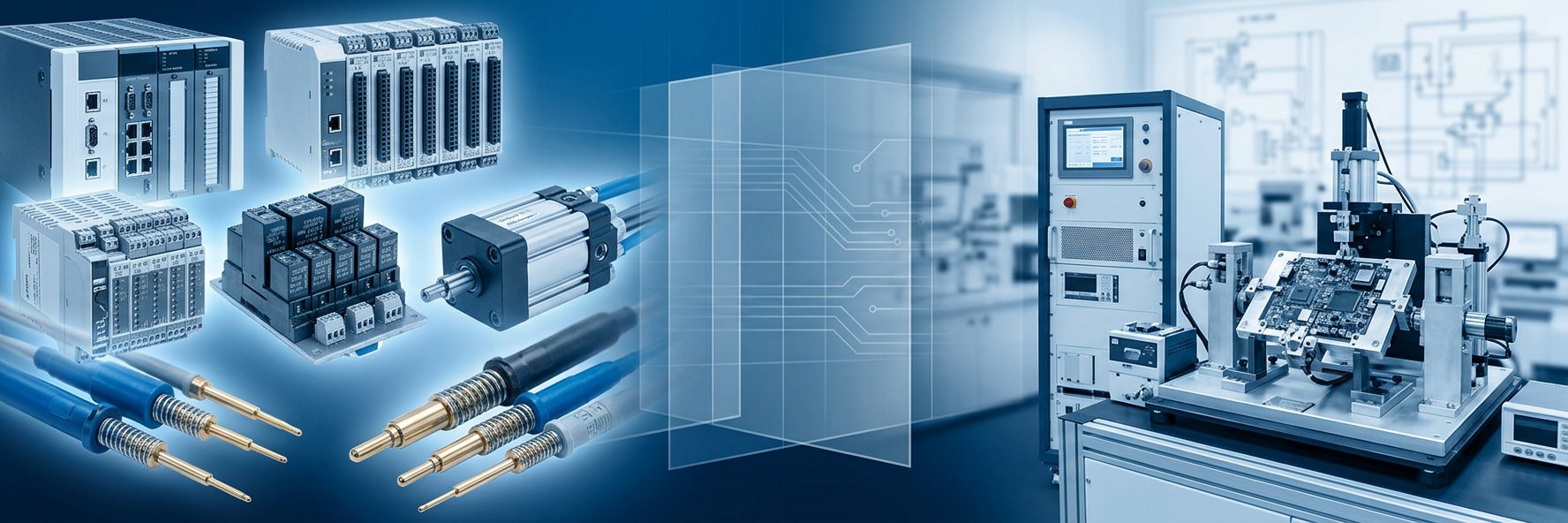
What Is Automated Test Equipment (ATE)? A Technical Overview
Manufacturers need reliable ways to confirm that finished products meet their required performance and quality standards before leaving the production line. End of line testing plays an important role in this process, using defined checks to identify defective components and verify that products function as intended.
Automated Test Equipment (ATE) makes this process more consistent by carrying out programmed tests, recording results and determining whether products meet specified acceptance criteria. But what exactly is Automated Test Equipment, how does it work and when should manufacturers consider using it?
What Is Automated Test Equipment (ATE)?
Automated Test Equipment (ATE) refers to machinery or systems designed to test components and assemblies against predefined performance requirements.
Rather than relying on operators to carry out measurements and interpret results manually, ATE performs tests automatically using programmed parameters and measurement instruments.
It can be integrated into a manufacturing process or installed as standalone end of line testing equipment.
The primary purpose is to confirm that manufactured products meet their required functional specifications before progressing to the next production stage or being despatched.
What Types of Tests Can Automated Test Equipment Perform?
ATE can be configured to assess different mechanical, electrical and fluid-related characteristics depending on the product being manufactured.
Common testing applications include:
Mechanical Functionality Testing
Mechanical testing confirms that moving components operate correctly under specified conditions.
This may involve checking movement, operating forces, travel distances or cycle times.
Typical applications include actuators, valves, latches and other mechanical assemblies.
Pressure and Leak Testing
Pressure testing determines whether a component can maintain a specified pressure within defined limits.
Leak testing identifies unwanted gas or fluid leakage through seals, joints or component surfaces. The two are related but answer different questions, as explained in our guide to leak testing equipment vs pressure testing machines.
These tests are particularly important for sealed assemblies, hydraulic systems, pneumatic components and fluid-handling equipment.
Flow Testing
Flow testing measures whether liquids or gases pass through a component at the required rate.
It can identify restrictions, blockages or incorrect valve operation that may affect product performance.
Electrical and Continuity Testing
Electrical testing confirms that circuits and components operate within specified voltage, current and resistance limits.
Continuity testing verifies that required electrical connections are present and helps identify open circuits or unintended short circuits.
Automated manufacturing testing equipment can combine several of these checks into one programmed testing sequence.
How Does End of Line Testing Equipment Determine Pass or Fail?
One of the main advantages of ATE is its ability to apply consistent acceptance criteria. Before testing begins, engineers establish the parameters a product must satisfy. These might include pressure limits, flow rates, electrical measurements or mechanical operating forces.
The equipment measures the required characteristics and compares the results against the programmed limits. Products that satisfy the specified criteria receive a pass result, while those outside the acceptable range are identified as failures. This removes the need for operators to interpret borderline readings individually.
However, the reliability of these decisions depends on the accuracy of the test parameters and measurement system. Incorrect limits can result in defective products passing inspection or acceptable products being rejected.
Why Is Test Data and Traceability Important?
Automated Test Equipment can record results directly during each testing cycle, creating a consistent record of product performance.
Depending on the system configuration, this information may include:
- Product serial number or batch identification.
- Date and time of testing.
- Test parameters and programmed limits.
- Actual measured values.
- Pass or fail status.
- Test station or equipment identification.
This information supports quality assurance, production monitoring and investigations into manufacturing defects.
Traceability is particularly valuable in sectors such as automotive, aerospace, medical devices and defence, where documented evidence of product testing may be required.
Automated recording also reduces the risk of transcription errors associated with manually completed testing records.
What Are the Benefits of Automated End of Line Testing?
Introducing automated end of line testing can provide several advantages over manual inspection.
- Improved consistency: Every product is assessed against the same programmed acceptance criteria, reducing differences between operators.
- Greater production efficiency: Automated testing can reduce manual handling and support predictable testing cycles.
- Reduced risk of human error: Automatic measurements and pass/fail decisions minimise reliance on operator interpretation.
- Improved traceability: Test results can be recorded and linked to individual products or production batches.
- Better quality control: Products that fail defined tests can be identified and prevented from progressing through production.
These advantages are particularly relevant for manufacturers operating high-volume production lines or working with complex assemblies.
When Should Manufacturers Consider Automated Test Equipment?
ATE is particularly suitable when production volumes, testing complexity or quality requirements make manual testing difficult to manage consistently.
Manufacturers should consider automation where:
- Multiple performance characteristics must be tested.
- Production throughput is restricted by manual testing.
- Consistent pass/fail decisions are essential.
- Product-level test records are required.
- Testing involves precise measurements that are difficult to perform manually.
- Defective products could create significant safety, reliability or warranty risks.
However, automation is not always necessary.
Manual or semi-automated testing may remain appropriate for low-volume production, prototype development or applications requiring specialist interpretation.
The decision should be based on the product requirements, production volumes and commercial justification for automation. The same considerations apply more widely when deciding between manual and automated assembly.
Contact TQC About Automated Test Equipment
TQC designs and manufactures bespoke automated test equipment for manufacturers requiring reliable, repeatable product testing.
Our engineering team works with customers to establish testing requirements, define acceptance criteria and develop appropriate solutions for their production processes.
Whether you need standalone end of line testing equipment or testing integrated into an automated assembly system, we can help identify the most suitable approach.
Explore our bespoke automation solutions or contact TQC’s engineering team to discuss your testing requirements.