


Weapon Leak Test Machine
Machine supplied: Two Weapon Leak test drawer fixtures and associated leak test instruments
Client: Leading Defence Contractor
Part: NLAW Combat Weapon
Test Method: Pressure Decay (Dosing Technique)
The Challenge
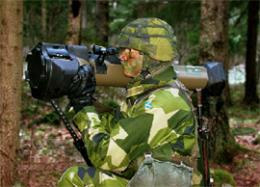
A leading defence contractor needed a leak test solution for the NLAW (Next Generation Light Anti-Tank Weapon) – a man-portable, disposable weapon system consisting of an anti-tank missile sealed within a launch tube. The sealed assembly design prevents direct internal pressurization, requiring an external chamber approach. The test system needed to meet strict defence industry quality standards while accommodating the large physical size of the weapon assembly.
The Solution
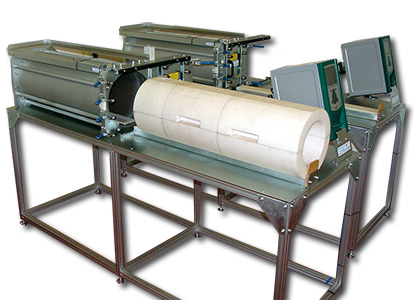
TQC designed and built two drawer-style leak test fixtures using pressure decay methodology. Each system creates a sealed chamber around the weapon assembly, pressurizes the external volume, and monitors for pressure decay that would indicate leakage into the sealed weapon. The drawer fixture design provides safe operator access while maintaining test accuracy through precision-machined tooling and volume-reduction infill pieces.
Technical Overview
Pressure Decay Testing for Sealed Assemblies
The NLAW weapon cannot be tested using conventional internal pressurization because it’s a permanently sealed unit. The pressure decay (dosing) technique solves this by creating an external test chamber around the component. The chamber is pressurized with air, and any leak in the weapon seal allows pressure to enter the weapon cavity, causing measurable decay in the external chamber pressure. This indirect method provides sensitive leak detection without requiring access to the internal volume. More information on leak testing techniques can be found here.
Weapon Leak Test Fixture Design
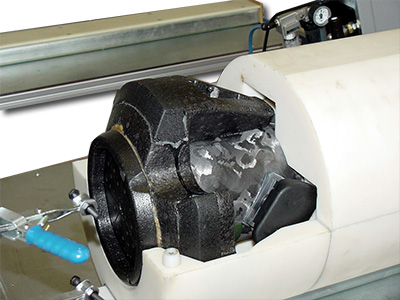
Machined Weapon Nest: The weapon assembly sits in a precision-machined nest that locates and supports the part during testing. The nest design accommodates the weapon’s geometry while providing consistent positioning for repeatable test results.
Volume-Reduction Infill: Custom infill pieces fit around the weapon to minimize the test chamber volume. Reducing the test volume increases test sensitivity by making pressure changes more detectable. The infill pieces are designed to closely follow the weapon contour without contacting potential leak areas.
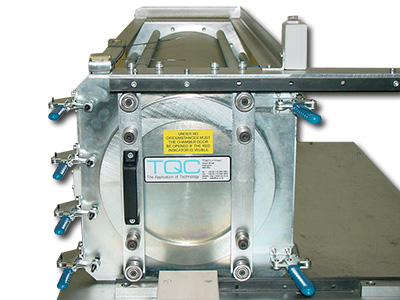
Drawer Test Chamber: The weapon nest and infill pieces slide into a drawer-style test chamber on rails. The drawer mechanism allows safe loading and unloading outside the chamber while providing a sealed test environment when closed.
Manual Door Clamping: The chamber door uses manual clamps to secure it during the test cycle. The clamping mechanism provides consistent sealing force and allows visual verification that the chamber is properly secured before testing begins.
Weapon Leak Test Sequence
The leak test instrument controls the complete test cycle automatically once the operator initiates the sequence:
1. Fill Phase: The test chamber is pressurized to the specified test pressure (typically determined by weapon specifications and leak sensitivity requirements).
2. Stabilization Phase: Pressure is held while the system reaches thermal equilibrium. This eliminates false readings caused by temperature-induced pressure changes.
3. Test Phase: The system monitors chamber pressure over a defined time period. Pressure decay indicates air entering the sealed weapon through a leak path.
4. Venting Phase: The chamber is vented to atmospheric pressure, allowing safe door opening.
5. Result Indication: Pass/fail indication is displayed via green/red lights on the instrument panel. Test data is recorded for quality documentation.
After test completion, the operator unclamps and opens the door, pulls the drawer assembly out of the chamber, and removes the tested weapon for inspection or packaging.
Weapon Leak Test Control System
The system uses fixture control that is part of the leak test instrument. This leak test instrument integrates pressure transducers, control valves, and sequencing logic in a single package. The drawer fixture control (pneumatic clamping, if implemented, and interlocks) is managed directly by the leak test instrument without requiring a separate PLC, simplifying the system architecture.
Weapon Leak Test System Specifications
- Test Method: Pressure decay (external dosing)
- Fixtures Supplied: 2 complete systems
- Chamber Style: Drawer fixture with manual clamping
- Part Handling: Manual load/unload
- Test Volume Reduction: Custom infill pieces
- Control: Series 20 leak test instrument with integrated fixture control
- Pass/Fail Indication: Visual (green/red lights)
- Safety: Self-guarding drawer design, interlocks prevent door opening under pressure
Key Features
Large Sealed Assembly Testing: Accommodates full weapon assembly dimensions while maintaining test accuracy through volume reduction.
Pressure Decay Methodology: Detects leaks without requiring access to the internal sealed volume.
Self-Guarding Design: Drawer mechanism keeps operators away from the pressurized chamber during testing.
Integrated Control: Leak test instrument manages both test sequencing and fixture operation without separate PLC.
Standard Series 20 Technology: Proven leak test platform with established reliability in defence and aerospace applications.
Results
The two leak test fixtures provide the defence contractor with validated quality verification for NLAW weapon assemblies. The pressure decay approach successfully detects seal leaks in the closed weapon system, ensuring only conforming units are released for field use. The drawer fixture design provides safe, repeatable testing while meeting the stringent quality requirements of the defence industry.
Related Capabilities
This project demonstrates TQC‘s expertise in:
- Pressure decay leak testing for sealed assemblies
- Custom fixture design for large defence components
- Drawer-style test chambers with safety interlocks
- Series 20 standard leak test fixtures
- Defence and aerospace industry quality standards
- Test volume optimization for improved sensitivity
- External dosing techniques for inaccessible internal volumes
To view a printer friendly format please click below
If you have sealed assemblies or defence components that require pressure decay leak testing, contact TQC to discuss your application.